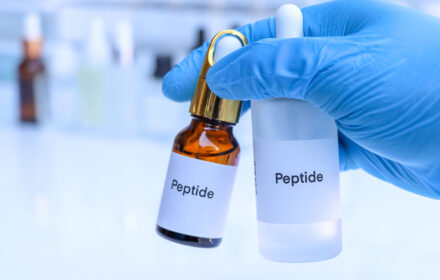

Research Peptides Guide
Many researchers have been wondering what research peptides actually are and how they can be used as a contemporary biochemical tool when conducting their laboratory investigations. Research peptides are made up of short sequences of amino acids and are helpful in laboratory studies to investigate how biological systems work, assess evidence for drug design concepts, and explore cellular processes.
Research peptides are useful to scientists in a research laboratory setting for studying relationships among proteins, hormones, and the development of new therapeutic modalities. Because of the high degree of specificity and flexibility of research peptides, they have become an important tool in contemporary laboratory research in a variety of disciplines, including molecular biology, pharmacology, and biotechnology.
This document provides an overview of what research peptides are, how laboratories utilize them, and some of the things that researchers should keep in mind before sourcing or handling research peptides.
What Do You Need to Know About Research Peptides?
Research peptides are defined as small peptide fragments or sequences, which are made from peptide bonds that connect amino acids. These small peptides have been designed to simulate the naturally occurring peptides in the body that serve as signaling molecules responsible for many biological functions.
In many laboratories around the world, these peptides will be created and manufactured using a variety of technical procedures to allow researchers to study how these peptides function within controlled environments.
Unlike pharmacological drugs that have received FDA approval for human use and consumption, most research peptides will often be identified as being ***For Laboratory Research Only*** in order for scientists to perform valid scientific experimentation that assists scientists in their understanding of biological systems.
Basic Characteristics of Research Peptides
Research peptides share many of the same basic characteristics:
– are made from small chains of amino acids;
– are designed and created for a particular biological purpose;
– are synthesized via solid-phase peptide synthesis;
– have been used under controlled laboratory conditions; and,
– are most often stored in their lyophilized (freeze-dried) form.
Because of their small size, research peptides are easier to work with, study, and modify than larger proteins.
Utilization of Research Peptides in Scientific Research
Research peptides are an integral part of many types of scientific research and are commonly used in laboratory settings to test scientific theories regarding cellular behavior, receptor activity, and biological signaling.
- Investigation of Cell Communication
Cells communicate with one another through signal molecules, and many peptides serve as signaling molecules between cells.
Scientists use synthetic peptides to understand how cells respond to different stimuli by observing:
- Receptor activation.
- Hormonal signaling pathways.
- Enzymatic interaction.
This allows scientists to better understand how biological systems respond to stimuli.
- Drug Discovery and Development
Peptide research is commonly the starting point for pharmaceutical research.
Research peptides are used to:
- Test new possible therapeutic targets
- Investigate receptor binding
- Study biological reactions in laboratory models
Most modern medicines have been developed from early peptide research that demonstrated good biological effects.
- Researching Protein Interactions
Peptides have proven to be useful tools for investigating the ways that proteins interact with one another; since peptides represent specific segments (or fragments) of larger proteins, they provide scientists with the ability to isolate smaller portions (or pieces) of larger biological mechanisms.
This capability is extremely important in scientific disciplines such as:
- Immunology
- Cancer Biology
- Neurobiology
- Laboratory Assays and Diagnostic Research
Peptide-based assays are frequently employed in developing complex immunoassays. Scientists exploit their specificity and versatility to identify antibodies, investigate immunity levels, and quantify enzyme activity—all with high sensitivity and precision. Due to their flexibility, peptide-based assays are frequently used in experimental research laboratories to detect disease biomarkers, with applications including early diagnosis, monitoring disease progression, and evaluating therapeutic responses. These applications highlight the key role of peptides in innovative diagnostic research and transformative clinical care.
Peptides Research Commonly Used
Many types of peptides exist for research purposes in laboratories, and they can be divided into sub-categories of use.
- Peptides Associated with Endocrine Hormones
Peptides that resemble existing endocrine hormones will be used to examine the processes associated with Endocrine Signaling.
- Peptides Associated with Growth Factors
Peptides that mimic growth factors will allow researchers to study how new cells are generated or how to regenerate injured areas.
- Peptides Related to Neuron Function
Neurotransmitter Activity and Neuronal Activities are studied using these types of peptides.
- Peptides Involved in Immune Function
Peptides involved in the immune system will assist researchers in studying the responses of the immune system and understanding how the immune system produces inflammatory cytokines.
How Research Peptides Are Produced
SPPS is the most widely used method to produce research peptides.
Steps of Peptide Synthesis
1) A researcher determines what amino acids will be in the sequence of the peptide.
2) The researcher attaches the first amino acid to a solid phase (e.g., resin).
3) Each of the next amino acids is attached to the growing peptide chain in order from first to last.
4) The peptide is then removed from the solid phase.
5) The peptide is then purified using HPLC/mass spectrometry and confirmed to be pure.
The peptide may be freeze-dried after synthesis so that it can be stored/transported more easily.
Essential Quality Factors When Selecting Research Peptides
Quality is essential in laboratory research because low-purity peptides can yield erroneous or inconclusive results in experiments.
Researchers should evaluate the following key points before purchasing their research peptides:
- Certificate of Analysis (COA) – A Certificate of Analysis lists the peptide’s identity, purity, and laboratory testing. Typically includes:
- Purity Percentage
- Analytical test results
- Batch Number
- Manufacturing information
- Levels of Purity – Research peptides commonly fall into a purity range (grades) such as:
95% purity – acceptable for most experiments
98% purity – preferred with high sensitivity levels of research.
Higher levels of purity are beneficial for attaining more consistent results.
- Independent Third-Party Testing – An independent, third-party laboratory verifies the peptide with the labeled sequence.
- Appropriate Storage Conditions – Most peptides need to be frozen at low temperatures (typically in laboratory freezers) to ensure their long-term stability.
Common Mistakes When Utilizing Research Peptides
Even experienced researchers can have challenges when working with peptides. Avoid the following common mistakes to ensure your research meets the highest degree of quality.
- Utilizing Suppliers That Have Not Been Verified
Low-cost suppliers may sell peptides that have been manufactured without the appropriate quality assurance testing documents. Always ensure that you have verified a supplier’s credentials and laboratory report prior to purchasing their peptides.
- Not Reviewing the Certificate of Analysis (COA)
By not reviewing the COA, your research may use a peptide that has a low degree of purity or has the wrong amino acid sequence.
- Storing Peptides Incorrectly
If Peptides are improperly stored, they may be degraded. Temperature changes and/or exposure to water may also decrease peptide stability.
- Reconstituting Peptides Incorrectly
Using an improper solvent to reconstitute, not using the proper method to mix, or using other improper techniques could affect the integrity of your peptide.
By maintaining good laboratory practice, you will increase the quality of the results produced from your research.
Expert Opinion: Why Research Peptides are Important in Today’s Science
Over the last 20 years, peptides have become a key component of biotechnological and medical research.
Researchers view peptides as beneficial because they are:
- Specific
- Simple to produce
- Versatile for various types of research studies
In many instances, research involving peptides is the first step in discovering new biological therapies. Understanding how peptide chains of amino acids influence how cells behave will help researchers discover new therapeutic pathways for innovation.
Understanding Research Peptides
A Laboratory Primer is a valuable resource for scientists engaged in contemporary biochemistry. They are very useful for providing research on cellular signaling, protein interaction, and the potential therapeutic pathways through controlled research.
The quality of research peptides has a direct impact on the success of peptide research. Researchers need to use the peptides that meet their requirements and verify the quality (purity) of peptide compounds by utilizing supporting documentation (i.e., Certificates of Analysis) and sound storage and handling techniques.
If your lab is researching peptide materials, always ensure you do business with reputable vendors who provide verifiable test results and reliable production processes. Quality products are the foundation of successful research.
Frequently Asked Questions (FAQs)
- What are the applications of research peptides?
Research peptides have been studied in laboratory settings for their connection to biological processes, various receptor interactions, cellular signaling pathways and mechanisms, and the theoretical development of drugs.
- Are research peptides approved as a food source for humans?
Research peptides are labeled “For laboratory research use only” and are not approved as a food source or for medical use.
- How are peptides synthesized?
Most of the currently available peptides are manufactured by means of solid-phase peptide synthesis (SPPS), a step-wise addition of individual amino acids.
- Why is the purity level of a peptide important in research settings?
No other substances should be influencing the activity of the peptide being tested, meaning that proper purity of the peptide is critical to ensuring the activity measured during research can only be attributed to the peptide.
- What is a certificate of analysis for a research peptide?
A certificate of analysis for an individual research peptide provides both proof of the identity of the peptide being tested as well as the purity of the peptide and results from laboratory tests of the peptide to confirm the quality and authenticity of that peptide.
- Where do I store research peptides?
Research peptides should be stored in a laboratory setting or room that is cool, dry, and at temperatures that will help maintain their stability. In most cases, research peptides will also be stored or shipped in the lyophilized state.